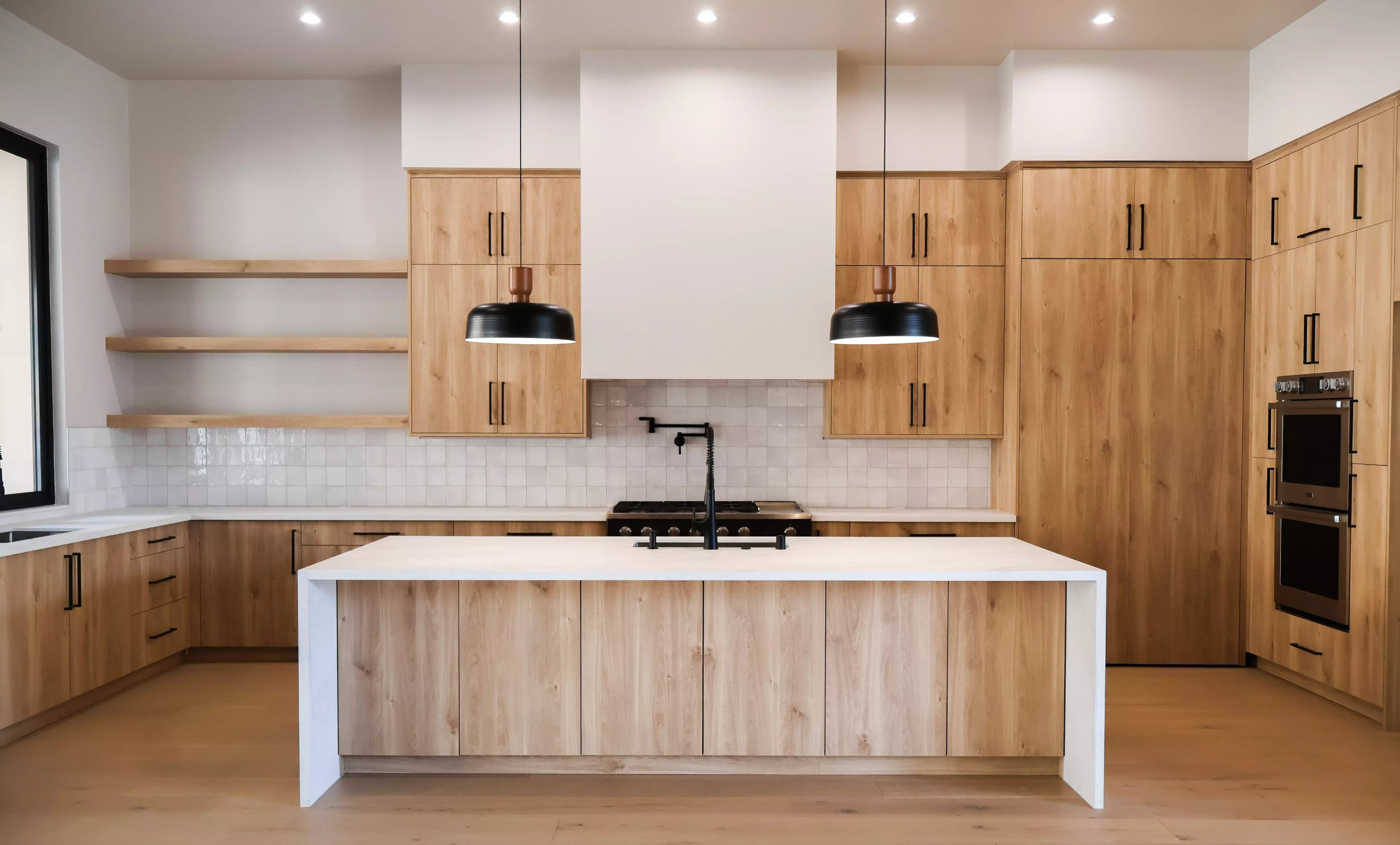
In kitchen renovations, materials are often the most easily overlooked yet most deserving priority. You spend more time in the kitchen than you realize, and the materials used for furniture, and whether they are environmentally friendly, directly impact air quality, lifespan, and even the health of your family. Therefore, choosing kitchen furniture made of environmentally friendly materials is not as simple as just saying “support sustainability,” but a decision that truly integrates into your quality of life.
Why are eco-friendly kitchen furniture so important?
The boards, adhesives, and coatings commonly used in modern kitchens can release VOCs (volatile organic compounds) if not selected properly, such as formaldehyde, benzene, and toluene. These substances accumulate in enclosed spaces, worsening air quality and potentially causing discomfort to sensitive individuals.
The key to eco-friendly furniture lies in:
Use safer, more renewable wood
Reduce traditional chemical glue
Controlling VOCs in coatings
Reduce carbon emissions throughout the production process
You could say that what you’re choosing isn’t just furniture, but also your lifestyle.
How to identify truly environmentally friendly products? First, look at these key certifications and labels.
The term “environmentally friendly” is easily misused in the market, so accurate evaluation criteria are crucial. The following certifications are the most credible:
FSC Certification (Forest Stewardship Council)
Ensure that timber comes from sustainably managed forests, not from sources of illegal logging.
GREENGUARD / GREENGUARD Gold
This indicates that the chemical emissions from the furniture are strictly controlled, making it safer to use in spaces such as children’s rooms and kitchens.
CARB2 compliance (California Air Resources Board)
Strict limits are placed on formaldehyde emissions from wood panels, which is a core indicator for judging environmentally friendly cabinets.
NAF / NAUF (Formaldehyde-free)
The adhesives used for MDF or plywood are formaldehyde-free, reducing air pollution.
Just remember this:
eco-friendly furniture is not just about the materials themselves, but also about the standards and tests it has undergone.

Common materials for eco-friendly kitchen furniture HYPERLINK “axiread.com” : advantages and disadvantages at a glance
Kitchen furniture is made up of a variety of materials, such as cabinets, panels, countertops, and hardware. Different environmentally friendly materials are suitable for different locations.
1. Bamboo
A natural, environmentally friendly, and increasingly popular material.
advantage:
It grows rapidly and has a strong regenerative capacity.
Durable, stable, and moisture-resistant
The style is natural, with a touch of Japanese or modern flair.
Applicable to:
cabinets, doors, countertops
2. Reclaimed Wood
Wood sourced from recycled old buildings and furniture.
advantage:
The unique old wood grain has a warm feel to it.
It has excellent environmental benefits (reducing waste and deforestation).
shortcoming:
Professional handling is required.
Size and quality may vary
Perfect for creating a natural, industrial, or rustic kitchen.

3. Low VOC plywood/eco-friendly MDF (Plywood & MDF)
Suitable for: Most cabinet structures.
The key to environmental protection lies not in the “material itself”, but in:
Does it use low-VOC/formaldehyde-free adhesive?
Does it meet the requirements of CARB2 / NAF / NAUF?
This is the most practical and economical environmentally friendly option for most families.
4. Recycled Metal
Metallic materials are highly recyclable, such as aluminum and stainless steel.
advantage:
Extremely durable
Strong sense of modernity
Fully recyclable
Applicable to:
cabinets, hardware, handles, and even panels.
5. Agricultural waste composite materials (such as plant-based boards)
For example:
Wheat straw board
Boards made from recycled paper and natural resin
advantage:
Utilize waste materials to reduce tree consumption
Low VOC emissions
It is an innovative material with a more thorough environmental protection concept.
Beyond the materials themselves: These “design and manufacturing strategies” are also environmentally friendly.
Environmental protection is not only about ingredients, but also about the entire product lifecycle.
Second-hand or refurbished furniture
Repainting, replacing door panels, or refurbishing cabinets reduces your carbon footprint more than buying new furniture.
Zero-waste design
Reduce cutting waste and material scraps.
Energy-saving manufacturing
Check whether the brand uses renewable energy, water-saving technologies, and waste recycling mechanisms.
These are often hidden behind product descriptions, but they are important clues for judging environmentally friendly brands.
Surface treatment is also important: coatings and adhesives are equally crucial.
Eco-friendly furniture is not only about “formaldehyde-free boards,” but the paint on the surface also affects indoor air quality.
Low VOC / VOC-free coating
Choose water-based paints, natural oils, and vegetable oils to avoid traditional solvent-based paints.
Environmentally friendly adhesives
Confirm whether low-VOC, formaldehyde-free (NAF/NAUF) adhesive is being used.
Many families only do half the work of environmental protection in home renovation because they neglect this part.
How to practice environmental protection? A purchasing strategy that can be implemented immediately.
1. Compile an environmental protection priority list.
This includes FSC, CARB2, GREENGUARD, formaldehyde-free, and recycled materials.
2. Choose suppliers with high transparency.
Those who are willing to disclose the source of materials, certification documents, and manufacturing methods are generally more trustworthy.
3. Treat “lifespan” as a key indicator
Furniture that is highly durable is actually a more environmentally friendly choice.
4. Consider the production method
For example, furniture brands that have energy-efficient factories, recycling mechanisms, or environmentally friendly supply chains.
5. Truly “tailor-made” solutions.
Reduce unnecessary customization, waste, and redundant design.
Conclusion: Creating a healthy, environmentally friendly, and durable kitchen
Eco-friendly kitchen furniture is more than just a trend; it’s the foundation for a long-term comfortable and healthy lifestyle. Whether you’re concerned about air quality, sustainable living, or simply want more durable and cost-effective furniture, you can achieve this through the following principles:
Choose the right materials (bamboo, recycled wood, low-VOC boards, recycled metal)
Choose reliable environmental certifications (FSC, GREENGUARD, CARB2, etc.)
Use healthy coatings and formaldehyde-free adhesives
Focus on manufacturing methods and product lifespan
By focusing on environmental protection in materials, craftsmanship, and lifespan, you can create a kitchen space that is truly friendly to yourself, your family, and the planet.