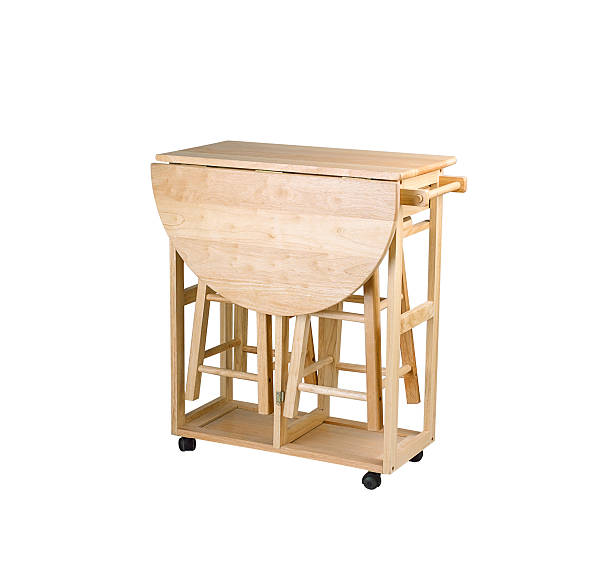
In modern urban small homes or open-plan apartments, the boundaries between functional areas are increasingly blurred. You may need to complete work, dining, and even the occasional gathering with friends and family in the same area. This makes traditional, bulky, fixed tables the number one killer of space efficiency.
Minimalism emphasizes “multiple uses” and the pursuit of maximum functionality. The Extendable or Foldable Table takes this concept to its extreme. It utilizes a sophisticated mechanical structure to give furniture flexibility , allowing your home to seamlessly transition between a minimalist “zero-function” state and a robust “full-function” state, depending on your needs .
This article will analyze in depth how this multifunctional table has become an essential tool for minimalists to achieve spatial freedom and maximize functionality.
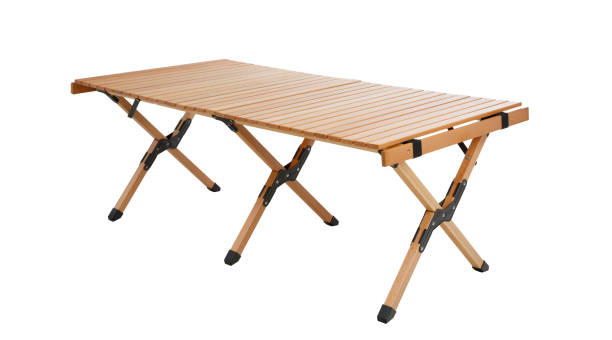
Core advantages: functional conversion and space efficiency
The core value of a foldable/retractable table lies in its ability to dynamically adjust its size according to the usage scenario, completely changing the efficiency of space utilization.
“Flexible space” that meets multiple functional needs
Minimalist state (zero function): When not in use, the table can be completely folded into a slim panel, a compact sideboard, or even completely hidden in the wall. This completely frees up the living or dining area and returns it to a minimalist blank state.
Fully loaded (multi-functional): Whether unfolded as a dining table for six, a spacious workbench, or a makeshift production station, it instantly provides ample countertop space.
Visual “subtractive aesthetics”
Eliminate redundant furniture: In a small apartment, a folding table can replace both a bulky fixed dining table and a dedicated work surface. This means you can reduce the amount of furniture you need to buy and store.
Simple storage form: The folded table usually presents a simple box or panel shape with clean lines and does not take up floor space, which is fully in line with the minimalist pursuit of formal unity .
Key Design Analysis: Two Mainstream Scaling Mechanisms
The design mechanism of a foldable/retractable table directly determines its functionality and user experience.
A. Extendable table
Mechanism: Additional extension panels (Leaf) can be pulled out/inserted on both sides or in the middle of the table, usually through a slide system.
Advantages of simplicity: The structure is the most stable , the tabletop height remains unchanged, and the appearance is no different from that of an ordinary dining table. It is suitable for families who need to quickly expand from daily dining for two to gatherings of six.
Practical tip: Pay attention to where the extensions fit; high-quality designs allow them to be hidden within the main body of the table , eliminating the need for additional storage space.
B. The Drop-Leaf or Fold-Down Mechanism
Mechanism: Fold one or both sides of the table down or up via hinges, or fold the table body completely into a cabinet.
Advantages of simplicity: The ultimate space saver . When folded, the width can be reduced to one-third of its original size, making it ideal for narrow or extremely small spaces. Some designs can even be fixed vertically to the wall , completely eliminating floor space.
Practical reminder: The folding mechanism (hinge) requires extremely high durability. When purchasing, you should pay special attention to checking the load-bearing capacity and lifespan of the hardware.
Purchase and match: let the foldable table fit into your minimalist life
Incorporating a foldable table into a minimalist space requires careful coordination and consideration.
A. Purchasing principles: hardware and lightweight
Hardware quality: The soul of an extendable table lies in its hardware . Whether it’s the slides, hinges, or locking mechanisms, choose high-quality, smooth-operating, and rust-resistant accessories to ensure long-term use and safety.
Lightweight materials: Prefer lightweight honeycomb panels, high-quality artificial boards , or aluminum alloy frames. This ensures that the table can be extended or moved without much effort, making it truly user-friendly.
B. Matching skills: transparency and simplicity
Use stackable or foldable chairs: To maintain the flexibility of the space, stackable or foldable dining chairs should be placed next to the table. When the table is folded, the chairs can be stored quickly and efficiently.
Use of transparent materials: Pairing with transparent glass or plastic chairs (such as ghost chairs) can minimize the visual weight and make the folded space appear lighter and more transparent.
I just rented a 40-square-meter studio apartment, and a fixed dining table was a luxury. I bought a small retractable table. Normally, it sits flush against the wall, barely big enough for a laptop. But when friends come over, I can pull it out in a minute to transform it into a dining table for six. This instant, reversible transformation has made me deeply appreciate the intelligence of minimalist furniture—it’s not about having less, but about allowing you to have more when you need it and return to a minimalist state when you don’t.

Conclusion: Minimalism: A Master of Spatial Elasticity
A foldable/retractable table is the perfect answer to the challenges of a small apartment. It’s more than just a space-saving tool; it’s a design philosophy that allows for flexibility and adaptability in your life.
By investing in a well-designed and reliable retractable table, you can easily switch between a quiet working state, a cozy dining scene and an open leisure space, truly making your home a multifunctional and burden-free minimalist living place.
Which function in your home (dining, working, or relaxing) requires this kind of “flexible space” the most? What do you think is the most important design detail of an extendable table?